When most people hear the term spray foam, they think of wall and attic insulation. In reality, modern foam technology has evolved into a powerful solution for structural repairs, concrete lifting, void filling, and advanced sealing applications.
Two of the most effective applications are foam slab jacking and injectable foam sealing. Together, these solutions help restore sunken concrete, stabilize soil conditions, eliminate hidden leaks, and strengthen building performance.
Foam technology allows property owners to repair, stabilize, and protect structures without the cost, mess, and disruption of traditional demolition and replacement.
What Is Foam Slab Jacking?
Foam slab jacking, also known as polyurethane concrete lifting, restores settled concrete by injecting expanding foam beneath the slab.
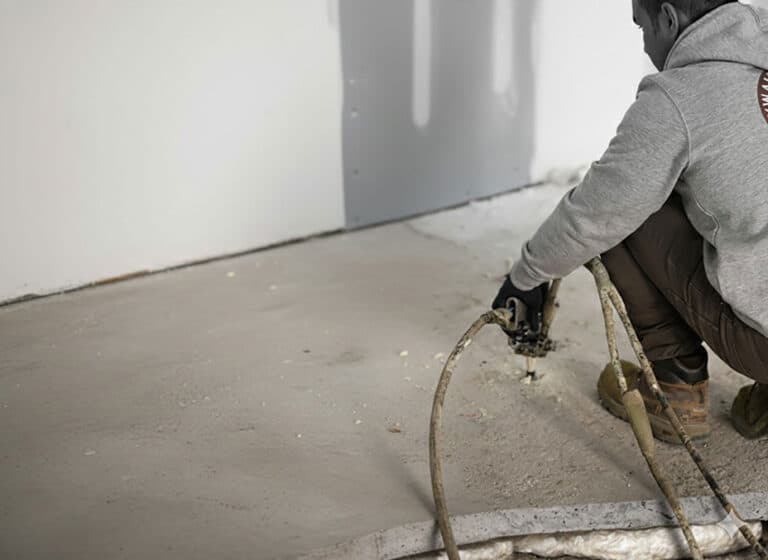
Instead of removing and replacing concrete, small access holes are drilled and specialized polyurethane foam is injected underneath. As the foam expands, it fills voids and gently lifts the slab back toward its original position.
Common Applications
- • Sunken driveways and garage floors
- • Uneven sidewalks and walkways
- • Pool decks and patios
- • Warehouse and industrial floors
- • Slabs affected by soil settlement
- • Concrete impacted by erosion or poor compaction
Why Foam Outperforms Traditional Mudjacking
Traditional mudjacking relies on heavy cement-based mixtures, while polyurethane foam uses lightweight materials that place less stress on the soil beneath the slab.
- • Smaller injection holes
- • Faster installation process
- • Minimal disruption to surrounding areas
- • Moisture-resistant materials
- • Better void filling performance
- • Same-day use in many situations
In many cases, foam slab jacking can cost significantly less than full concrete replacement while delivering excellent long-term performance.
What Is Injectable Foam Sealing?
Injectable foam sealing focuses on filling hidden gaps, cracks, voids, and pathways that allow unwanted air or moisture to enter a building.
Specialized foam is injected into targeted areas where it expands, bonds to surrounding materials, and creates a durable seal that helps improve building performance.
Common Sealing Applications
- • Rim joists and band joists
- • Utility penetrations
- • Hidden wall cavities
- • Foundation gaps and cracks
- • Air leakage pathways
- • Moisture infiltration points
Strengthening the Building Envelope
Buildings function as complete systems. Settlement issues, hidden voids, and air leaks often work together to create larger performance problems over time.
By combining foam slab jacking and injectable sealing foam, DESA Foam Insulation can help address both the visible symptoms and the underlying causes of building deterioration.
- • Improve drainage around foundations
- • Reduce air infiltration
- • Limit moisture intrusion
- • Stabilize weak soil conditions
- • Improve comfort and energy efficiency
- • Extend the life of existing structures
Fast, Clean, and Cost-Effective Repairs
One of the biggest advantages of foam technology is the minimal disruption it causes. Most projects require only small equipment, limited site disturbance, and very little cleanup.
Many foam-based repairs can be completed quickly, allowing driveways, sidewalks, warehouse floors, and workspaces to return to service the very same day with minimal disruption.
When Should You Consider Foam-Based Repairs?
- • Uneven concrete surfaces
- • Water pooling near foundations
- • Visible settlement issues
- • Cold floors near slab edges
- • Drafts in basements and crawlspaces
- • Cracks and gaps around structural elements
Need Concrete Lifting or Foam Sealing?
DESA Foam Insulation provides modern foam solutions that restore safety, improve building performance, and help property owners avoid costly replacements.
Request A Free Assessment