In modern construction, performance is no longer optional. Builders, developers, and property owners are expected to deliver buildings that are energy efficient, durable, comfortable, and compliant with evolving building standards.
At the center of this shift is insulation — and more specifically, spray foam insulation. Over the last two decades, spray foam has become one of the most effective solutions for creating high-performance building envelopes.
Spray foam insulation does more than insulate. It seals, protects, strengthens, and improves the long-term performance of the entire building.
What Makes Spray Foam Different?
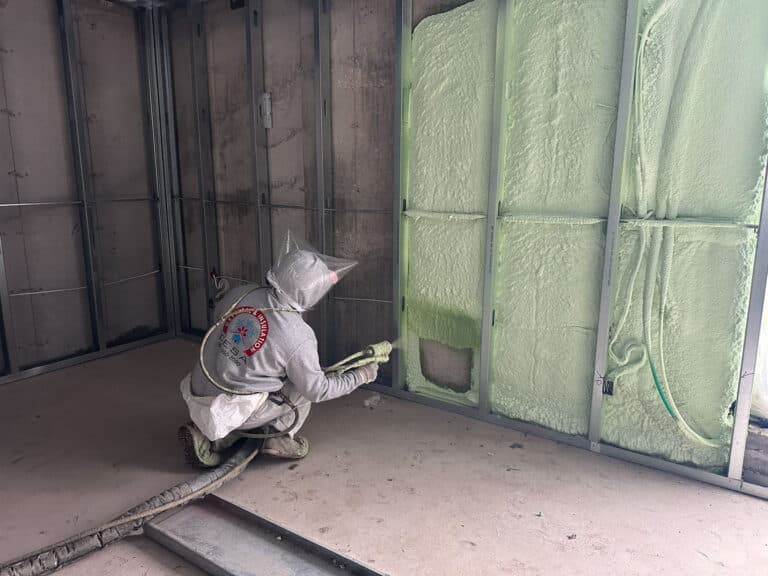
Unlike traditional fiberglass or batt insulation, spray foam expands when applied. This allows it to fill gaps, cracks, joints, and hard-to-reach spaces that other insulation materials often miss.
The result is a continuous thermal and air barrier that helps protect the entire building envelope from unwanted heat transfer and air leakage.
Superior Energy Efficiency
Air leakage is one of the biggest causes of energy loss in modern buildings. Spray foam addresses this problem directly by sealing the building envelope and reducing uncontrolled airflow.
This helps maintain stable indoor temperatures, lowers heating and cooling demands, and reduces monthly utility costs for both homeowners and commercial property owners.
Moisture Protection and Building Durability
Moisture is one of the leading causes of building deterioration. Closed-cell spray foam provides an additional layer of protection by helping control moisture movement and reducing the risk of condensation inside wall and roof assemblies.
This can help prevent mold growth, reduce structural damage, and improve indoor air quality over the life of the building.
Added Structural Strength
Closed-cell spray foam contributes additional rigidity to wall and roof systems. While insulation is its primary function, the added structural support provides valuable benefits in residential, commercial, and industrial applications.
Builders often choose spray foam because it improves both thermal performance and overall building resilience.
Better Indoor Comfort and Sound Control
Spray foam insulation helps create a quieter and more comfortable indoor environment by reducing drafts, minimizing temperature fluctuations, and limiting sound transmission.
This makes it an excellent choice for homes, offices, multi-residential buildings, and commercial spaces where comfort matters.
Ideal for Modern Construction
Today's architectural designs often include complex framing, irregular cavities, and advanced building systems. Spray foam adapts easily to these conditions while maintaining consistent insulation performance.
It can be installed in walls, attics, ceilings, basements, mechanical rooms, crawlspaces, and commercial structures with exceptional precision.
Why Professional Installation Matters
The performance of spray foam depends heavily on proper application. Surface preparation, material temperature, thickness, and installation technique all play a role in achieving maximum effectiveness.
With more than 20 years of experience, DESA Foam Insulation delivers professional spray foam installations that meet building code requirements and industry best practices.
The Future of Building Performance
As energy codes continue to evolve and performance expectations rise, spray foam insulation has become one of the most valuable investments property owners can make.
It reduces energy consumption, improves comfort, protects against moisture, and supports long-term building durability.
Ready to Upgrade with Spray Foam?
DESA Foam Insulation provides professional spray foam solutions for residential, commercial, and construction projects across Ontario.
Request A Free Quote